
Traditional Architect & Builder vs. Design-Build in Austin
Which Is Right for You?
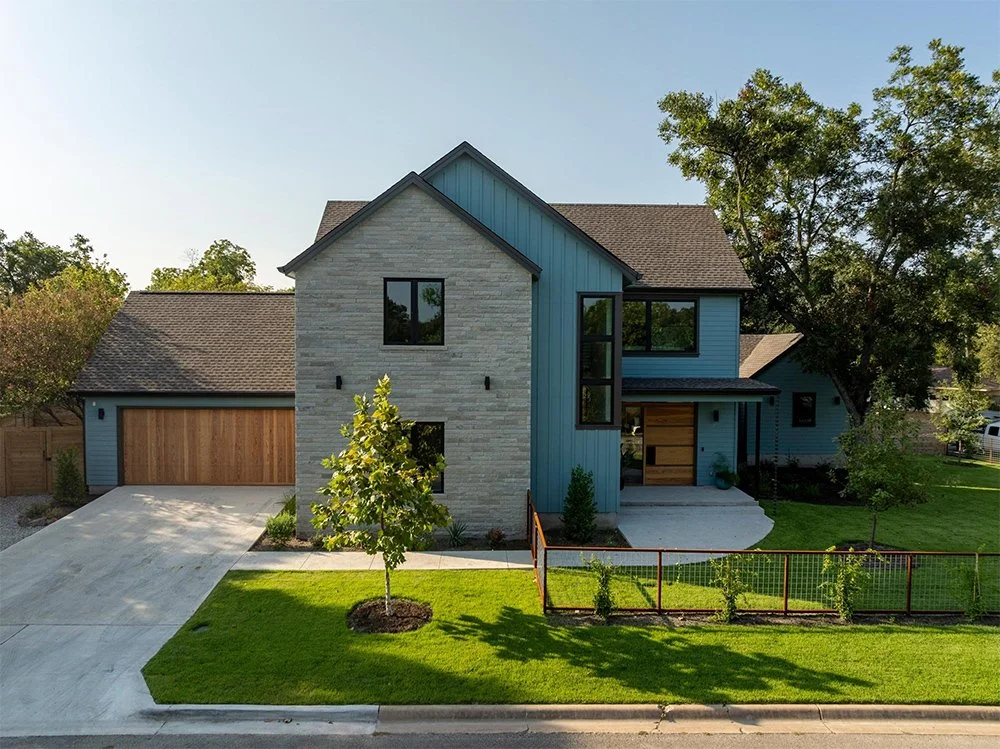
When you decide to build a custom home in Austin, one of the first decisions you face is not about style, square footage, or finishes. It is about the path you will take to get there.
Many homeowners find themselves weighing two main options: a traditional architect and builder model or a design-build experience led by a single team.
Both paths can produce beautiful homes.
The real question is which approach fits your lifestyle, your priorities, and the way you prefer to make decisions. Understanding the differences can help you move forward with confidence.

Two Paths to a Custom Home in Austin
At a high level, the two primary approaches look like this:
Traditional model
You first hire an architect to design your home. After the design is complete, you send the plans to several builders for pricing and select one to construct the home.
Design-build model
You partner with a builder-led team from the earliest stage. Design and construction planning happen together, with one team guiding the project from concept to completion.
Both methods involve talented professionals and can lead to exceptional results. The experience along the way, and the type of coordination required from you, are where the differences become most apparent.
How the Traditional Architect and Builder Model Works
In the traditional approach, the design phase and construction phase are distinctly separate. You start by selecting an architect whose work and philosophy resonate with you. Together, you develop the floor plan, elevations, and details until the design feels complete.
Once you have a finished set of drawings, you send the plans to multiple builders to obtain bids. After comparing proposals, you select a builder and move into the construction phase. At this point, the builder interprets the documents, organizes trades, and carries out the work.
This model can offer:
Maximum freedom to choose any architect and any builder independently.
The ability to obtain competitive bids based on one set of completed plans.
A clear separation between design responsibilities and construction responsibilities.
At the same time, it often places you in the role of coordinator between the architect and builder, especially if questions or conflicts arise during construction.
How the Design-Build Model Works
In a design-build experience, you bring your ideas and goals to a builder at the beginning. Instead of waiting until plans are complete, the builder becomes part of the planning process from the first stages.
The journey typically follows this arc:
Vision and discovery
You share your lifestyle, aesthetic preferences, and priorities. The team explores your site or ideal locations and helps clarify investment expectations.Concept design
An architect or designer collaborates with the builder to shape the initial concept, with ongoing discussion about structural considerations and cost implications.Detailed design and pricing
As the design is refined, the builder develops more precise budgets and schedules. Adjustments can be made in concert with both design and cost in mind.Construction and completion
The same team that helped shape the design manages the construction, addresses questions, and keeps you informed until move-in.
In this model, you still benefit from architectural expertise and creative vision. The difference is that design and construction are aligned under one process, not separated by independent contracts and handoffs.
Key Differences Between Design-Build and the Traditional Model
Before you decide which approach is right for your Austin custom home, it helps to look at how each model handles the fundamentals: communication, budget, timing, design cohesion, and your own level of involvement.
Communication and Accountability
Traditional model
In a traditional structure, you typically hold separate contracts with your architect and your builder. If a question arises in the field, the builder may request clarification from the architect. You may be asked to weigh in on whether a design detail should change or remain as originally drawn.
When everything goes smoothly, this can work well. When challenges appear, it may be less clear who is responsible for resolving them. You may find yourself mediating between design intent and construction realities.
Design-build model
With design-build, there is one primary team responsible for stewarding your project. Design and construction perspectives are present at the same table, so questions are resolved within a shared framework rather than across separate silos.
For many homeowners, this unified accountability provides peace of mind. You know who to call, who is overseeing each phase, and who is responsible for protecting the integrity of your vision.

Budget and Cost Control
Traditional model
In a traditional process, it is common to finalize the design before getting detailed construction pricing. If the bids come back significantly higher than expected, you may face a difficult choice. You can increase your budget, reduce square footage, or adjust materials and details.
These redesign cycles can extend timelines and add complexity, particularly when changes must be re-coordinated with structural engineering and permitting.
Design-build model
Design-build weaves budget and cost awareness into the design conversations from the beginning. As the plan evolves, the builder provides feedback about how choices are likely to affect the overall investment.
This can help you:
Avoid falling in love with a design that is not aligned with your budget.
Make informed trade-offs between size, finishes, and features.
Reduce the need for major redesigns late in the process.
For owners who value financial clarity, this integrated approach can feel more predictable and transparent.
Timeline and Efficiency
Traditional model
The traditional path often unfolds in distinct, sequential stages. Design must be fully complete before accurate bids are gathered. Engineering and permitting generally follow. Only then does construction begin.
If redesign becomes necessary due to budget or structural considerations, these steps can be reset or slowed significantly.
Design-build model
Design-build allows for more strategic overlap. As the design moves from concept to detailed drawings, the builder can begin preliminary scheduling, engage key trades, and prepare for permitting.
While quality custom homes still require time, unnecessary gaps between phases can be minimized.
In a high-demand market like Austin, where availability of trades and inspectors can impact timelines, this kind of coordination often leads to a smoother overall experience.
Design Cohesion and Experience
Traditional model
The traditional approach can produce remarkable architecture, especially when you collaborate with a talented design team. The builder’s role is to interpret and execute that vision with care.
However, if design details and construction methods are not aligned, conflicts can arise. Some features may be difficult to build within budget or may need adjustment once work begins. Indoor and outdoor spaces, mechanical systems, and structural realities must be integrated after the design has been largely set.
Design-build model
In a design-build style experience, cohesion is a core priority. Because the builder and architect are working together from early on, the relationship between structure, systems, and finishes is considered in a holistic way.
For an Austin or Hill Country home, this may look like:
Aligning window placements, shading, and glazing choices with energy performance and comfort.
Coordinating outdoor living spaces, pools, and landscaping with the home’s layout and structural plan.
Selecting materials that suit both the design aesthetic and the realities of the Texas climate.
The goal is a sanctuary where every element feels connected, from the first impression at the entry to the smallest detail.
Homeowner Involvement and Complexity
Traditional model
With separate design and construction teams, you are often at the center of communication. You manage relationships, relay messages, and choose how to respond when design intent and practical constraints conflict.
Some homeowners enjoy this high level of involvement and feel comfortable managing the complexity. Others find it demanding, especially alongside careers, family life, and other commitments.
Design-build model
Design-build aims to simplify your role. You stay engaged in meaningful decisions about how the home looks, feels, and functions. At the same time, a single team handles the technical coordination behind the scenes.
Design-build model
Design-build aims to simplify your role. You stay engaged in meaningful decisions about how the home looks, feels, and functions. At the same time, a single team handles the technical coordination behind the scenes.
This approach often works well for:
Busy professionals who want a guided process.
Out-of-town owners building a second home or relocating to Austin.
Families who prefer to focus on big picture choices rather than daily coordination.
Special Considerations for Building in Austin
Austin and the surrounding Hill Country introduce distinct factors that make process selection especially important.
These include:
Varied topography, including sloped sites, rock, and significant grade changes.
Mature trees and environmental considerations that influence placement and foundation design.
City and county permitting requirements, as well as HOA or architectural review boards.
A climate that demands attention to shading, glazing, insulation, and outdoor comfort.
A team familiar with these dynamics can help you navigate them smoothly. In many cases, a design-build style experience allows these regional factors to be addressed directly in the design and planning stages rather than as surprises in the field.
How Levesque & Co. Blends Architecture, Design, and Building
At Levesque & Co., we view each home as a sanctuary that should feel deeply connected to its site and to the people who will live there. That perspective naturally leads us to a highly collaborative process that shares many benefits with a design-build model.
Our work combines:
Early involvement in understanding your goals and evaluating your site.
Close partnerships with architects and designers who excel at creating spaces that are both beautiful and livable.
A relentless focus on craftsmanship, clarity, and communication during construction.
Rather than treating design and construction as separate worlds, we see them as parts of a single journey. Our role is to orchestrate that journey so that your experience is as thoughtful as the home itself.
Which Approach Is Right for Your Project?
The right path depends on your preferences and priorities.
A more traditional architect and builder model may be a good fit if:
You already have a trusted relationship with a specific architect.
You prefer to independently select each member of your team.
You are comfortable managing coordination and communication among multiple parties.
A design-build style experience may be ideal if:
You want one primary partner guiding you from early vision through completion.
You value budget alignment, clear timelines, and streamlined communication.
You prefer an integrated approach that considers architecture, construction, and lifestyle as one cohesive whole.
Many of our clients find that a collaborative model, where we partner closely with leading architects while providing a unified building experience, offers the best of both worlds.
Talk Through Your Options With Levesque & Co.
Choosing how to build your home is as important as choosing where and what to build. The process you select will shape not only the finished result but also how you feel along the way.
If you are exploring a custom home in Austin or the Hill Country and are unsure which approach fits you best, we invite you to schedule a conversation. We will listen to your goals, discuss the realities of your site and investment, and help you understand how a collaborative, sanctuary-focused process can work for your project.
Together, we can determine the path that will bring your vision to life with clarity, integrity, and a sense of calm confidence.
Customer Testimonials
Levesque & Co. built our home. Not only is the quality top notch but they delivered in a timely manner considering the scarcity of workers and materials at the time of construction. They are knowledgeable, reliable, and take tremendous pride in their work. I have recommended them to other friends and clients looking to build or remodel homes and will continue to do so.
Paige D. on Google
Read Google Reviews
Key Takeaways
Two main approaches to building a custom home in Austin:
Traditional: Hire an architect first, then select a builder after design completion.
Design-build: Engage a builder-led team from the start, integrating design and construction.
Traditional model offers freedom in team selection but requires homeowners to coordinate between the architect and builder, which can complicate communication and timelines.
Design-build model provides unified accountability, early budget integration, and streamlined communication, reducing surprises and delays.
Austin’s unique factors—topography, climate, permitting—are best managed through a collaborative, design-build style process.
Levesque & Co. blends architecture and building into a seamless journey, focusing on craftsmanship and creating homes as sanctuaries connected to site and lifestyle.
Choosing the right path depends on your preferences: traditional suits those wanting independent control; design-build suits those seeking a guided, integrated experience.
Levesque & Co invites you to discuss your goals and find the best approach to bring your vision to life with clarity and confidence.